

Spoon Theory for Neurodivergent Children: Understanding Why Your Child Runs Out of Energy
"Why were they fine at school but melted down the moment they got home?"
It's one of the questions I hear most often from parents.
From the outside, it can seem confusing. Your child may have coped all day, only to become tearful, angry, withdrawn or overwhelmed over something that seems small.
What if the behaviour isn't about the small thing at all?
What if they've simply run out of "spoons"?
What is Spoon Theory?
Spoon Theory was originally created by Christine Miserandino to describe what it feels like to live with a chronic illness. Since then, many autistic, ADHD and otherwise neurodivergent people have embraced the idea because it beautifully explains how energy is experienced differently.
Imagine your child starts each day with a handful of spoons.
Each spoon represents a unit of physical, emotional and mental energy.
Every activity throughout the day uses one or more spoons.
Once those spoons are gone, your child can't simply "try harder." They need opportunities to rest, regulate and recharge.
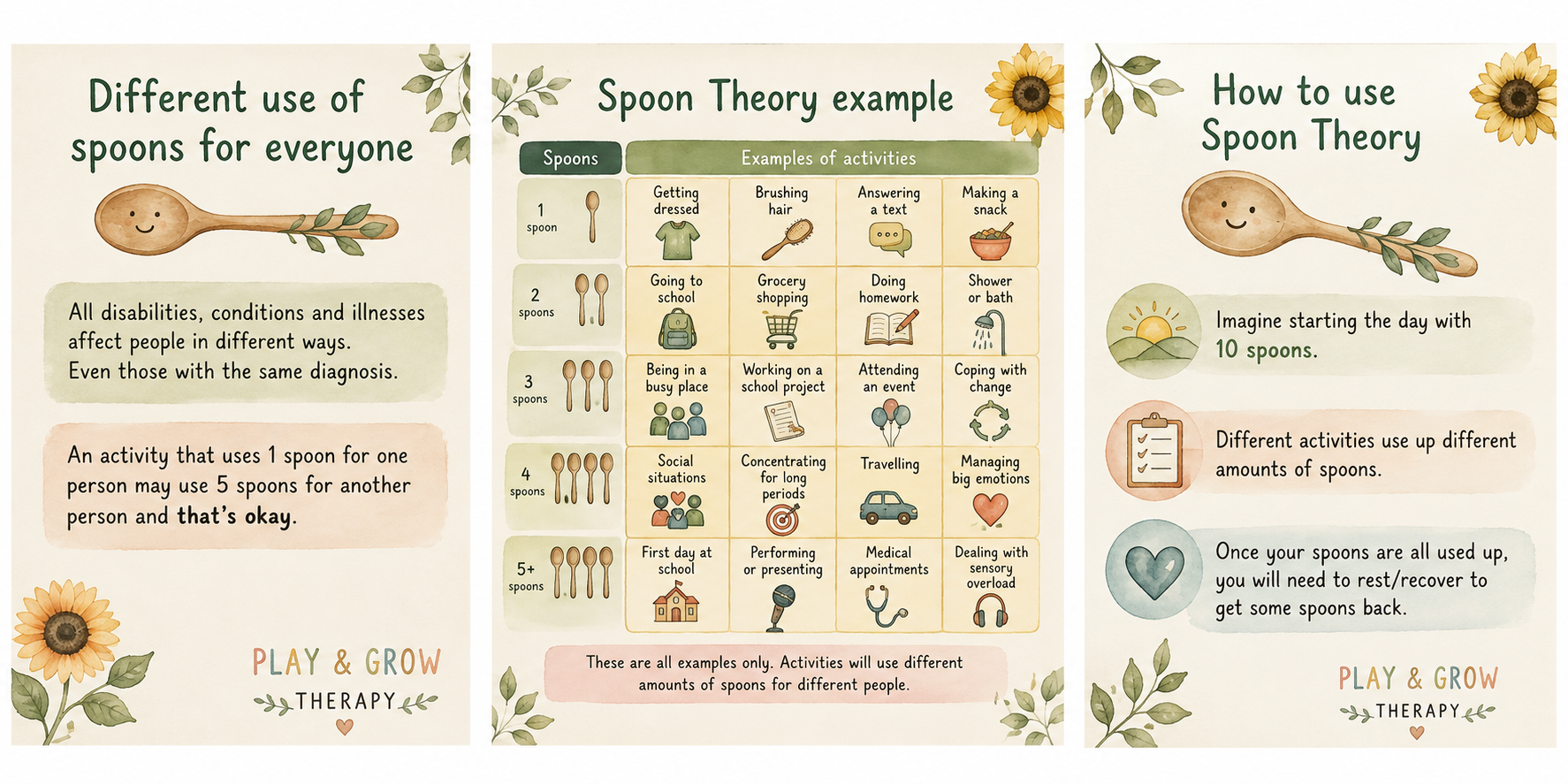
Why do neurodivergent children use more spoons?
Many everyday experiences require far more energy for neurodivergent children than they do for neurotypical children.
For example:
Getting dressed.
Coping with unfamiliar clothing textures.
Eating challenging foods.
Managing loud environments.
Filtering background noise.
Following multiple instructions.
Switching between activities.
Navigating friendships.
Sitting still.
Concentrating.
Masking autistic traits.
Managing impulsivity.
Coping with uncertainty.
While these tasks may appear effortless from the outside, they often require significant executive functioning, emotional regulation and sensory processing.
By the end of the day, many children have used almost all of their available energy.
What happens when the spoons run out?
When a child's energy is depleted, their nervous system may struggle to keep up with the demands being placed on it.
You might notice:
Meltdowns.
Increased irritability.
Emotional outbursts.
Difficulty following directions.
Refusing everyday tasks.
Withdrawing from others.
Seeking sensory input.
Becoming unusually quiet.
Appearing "defiant."
Complete exhaustion.
These behaviours are often signs that your child's nervous system has reached its limit and that they are struggling with executive functioning skills.
Many neurodivergent children spend the school day working incredibly hard.
They may be:
Processing constant sensory information.
Managing social interactions.
Following routines.
Concentrating for long periods.
Controlling impulses.
Masking their natural responses to fit expectations.
By the time they arrive home, they are finally in the place where they feel safest.
That is often where the emotions come out.
The meltdown isn't usually caused by the request to take off their shoes or wash their hands.
It's often the final spoon.
How can we help children protect their spoons?
Every child is different, but many benefit from intentionally building opportunities to recharge throughout the day.
This might include:
Free, child-led play.
Time in nature.
Quiet spaces.
Sensory supports.
Movement breaks.
Listening to music.
Spending time with a trusted adult.
Engaging in special interests.
Predictable routines.
Reduced demands after school.
The goal isn't to prevent children from ever using their spoons.
The goal is to help them use their energy wisely while knowing they have safe opportunities to recharge.
Helping children understand their own energy
One of the most valuable things we can teach children is to notice how their body and brain are feeling.
Instead of focusing only on behaviour, we can begin conversations like:
"How is your body feeling today?"
"Do you think you have lots of energy or only a little?"
"What helps you feel recharged?"
"Would your brain like a quiet break or a movement break?"
Over time, these conversations help children build self-awareness, recognise their own needs and begin developing lifelong self-regulation skills.
A gentle reminder for parents
Every child starts the day with a different number of spoons.
Some days they have plenty.
Some days they have very few before breakfast.
Neither is a reflection of their character, their intelligence or your parenting.
When we begin to see behaviour through the lens of energy, sensory processing and nervous system regulation, it becomes easier to respond with curiosity instead of frustration.
Because behind every behaviour is a child doing the very best they can with the energy they have available.
Need support?
At Play & Grow Therapy, I support neurodivergent children and their families through neuroaffirming, play-based therapy that focuses on understanding the child beneath the behaviour.
If you're feeling overwhelmed or wondering how to better support your child, I'd love to help.
Play & Grow Therapy
Armidale, NSW | In-person and telehealth services
